
Chiropractic treatment at Minnesota Regenerative Institute

Minnesota Regenerative Institute

Chiropractic care in Baxter, MN

Personalized, non-surgical care to help you move more comfortably and get back to the activities you enjoy.

  • Care around your goals
  • Support beyond adjustments
  • Chiropractic and medical expertise

Baxter · Brainerd Lakes Area

Care that starts with you

Back pain, neck pain, or sciatica can make even familiar activities feel difficult. You don’t have to figure out the next step alone. At Minnesota Regenerative Institute in Baxter, Dr. Aaron Antony and Dr. Joe Kerber provide personalized chiropractic care to help you work toward more comfortable movement and the activities you miss.

If previous chiropractic care left you discouraged, we’ll listen to what helped, what didn’t, and what you still want to be able to do. With chiropractic, rehabilitation, spinal decompression, and medical services in one practice, your plan can draw on more than one approach. We’ll explain your options and work with you toward meaningful improvements in your day-to-day life.

7818 Excelsior Road, Suite 100 · Baxter, MN 56425

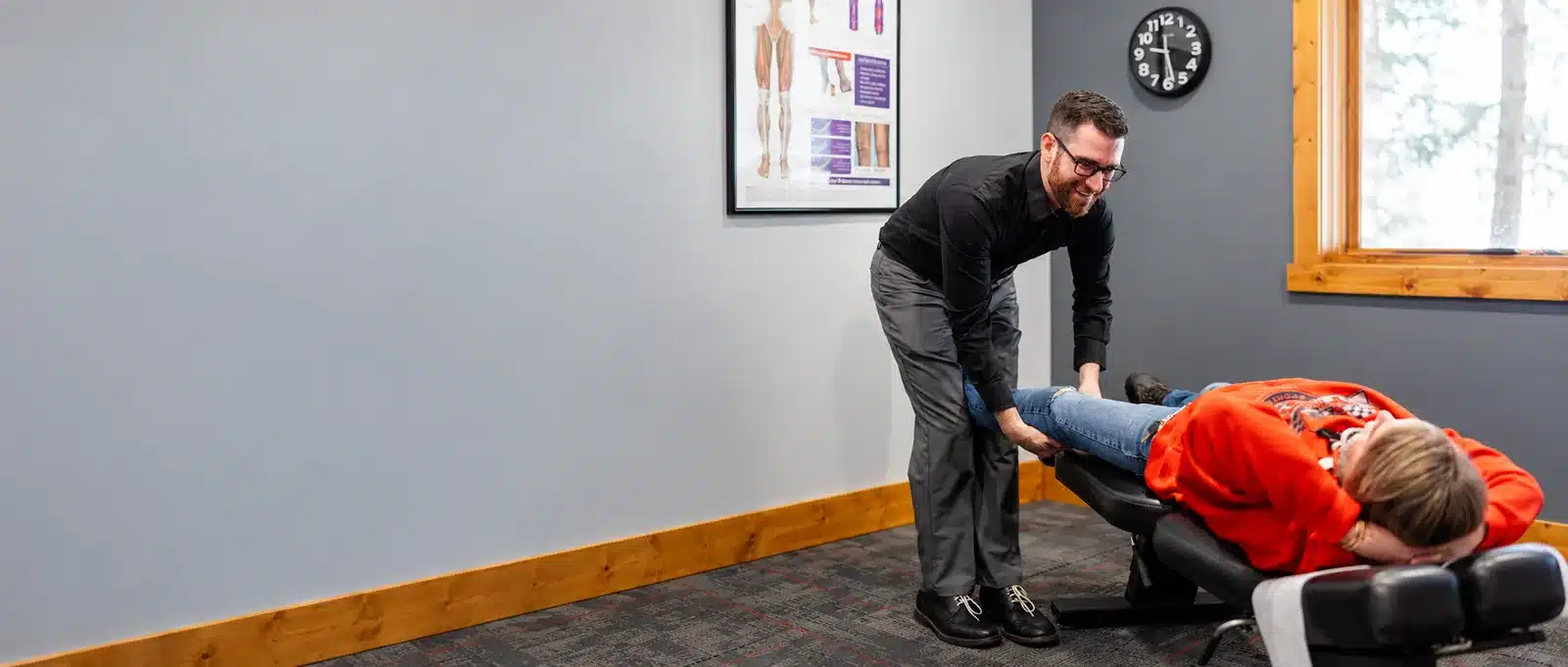
Hands-on chiropractic care in a treatment room at Minnesota Regenerative Institute
Care at our Baxter clinic.

Personalized, non-surgical care to help improve mobility, comfort, and quality of life.

Chiropractic care and rehabilitation

Your care can draw on chiropractic, rehabilitation, spinal decompression, and medical services within one practice. If adjustments alone haven’t met your needs, your evaluation can explore whether guided exercise, medical assessment, or a combination of services may be appropriate.

Start with your experience

Your evaluation considers your symptoms, health history, and how you move. Small details matter: when discomfort appears, which movements feel difficult, and how it affects your routine. Share what you want to feel more comfortable doing, from sitting through a drive to getting out for a walk. Those priorities help guide recommendations that fit your life.

Understand your options

You deserve a clear explanation of your care plan. We’ll discuss how each recommendation relates to your symptoms and goals, along with its benefits, risks, and alternatives. You can ask why a service is being suggested and what it involves. Understanding your options helps you make informed decisions about the next step in your care.

Move with confidence

Moving can feel intimidating when you’re already hurting. With guidance from the team, you can practice exercises and stretches that focus on strength, flexibility, and more comfortable movement. Ask for another demonstration or let us know when something doesn’t feel right. The aim is to help you build confidence for the movements you use every day.

Meet your chiropractors

Meet Dr. Aaron and Dr. Joe

Dr. Aaron Antony, D.C.

Dr. Aaron Antony, D.C.

Dr. Aaron provides chiropractic care for patients in the Brainerd Lakes Area and enjoys helping them work toward their health goals. He graduated in 2018. Outside the office, he spends time with his family and enjoys Minnesota’s outdoors.

More about Dr. Aaron on our team page
Dr. Joe Kerber, D.C.

Dr. Joe Kerber, D.C.

Dr. Joe earned his bachelor’s degree in Biology from St. Cloud State University and his Doctor of Chiropractic degree from Northwestern Health Sciences University in 2008. He enjoys caring for families. Outside the clinic, he enjoys golfing, hunting, fishing, and time with his two daughters.

More about Dr. Joe on our team page

Patient experiences

What our chiropractic patients say

Patients share their experiences with chiropractic care, rehabilitation, and support from our team.

Patients share their stories

Results vary by patient. Testimonials reflect individual experiences and are not guarantees of results. Treatment recommendations are individualized.

Sydney

Getting back to everyday activities

If past chiropractic care left you discouraged, there may be another path forward. Discover a more personal approach focused on everyday goals, from driving more comfortably to getting a better night’s sleep.

Watch on YouTube

Jeanne

Moving more comfortably

Climbing stairs. Turning to check traffic. Moving through your day with more confidence. See how chiropractic care and guided exercises can support the everyday movements that matter to you.

Watch on YouTube

Monica

A back-pain journey in progress

You don’t have to navigate persistent back pain alone. See what it can mean to have chiropractic, rehabilitation, and medical care working together around you as you take the next steps toward feeling better.

Watch on YouTube

Before your visit

Your questions about chiropractic care

I’ve tried chiropractic before. What could be different here?

If past chiropractic care brought only brief relief or little change, it’s reasonable to want a clearer plan before trying again. At Minnesota Regenerative Institute, your previous experience helps guide your evaluation. Chiropractic care, guided rehabilitation, spinal decompression, and medical services are available within one practice, giving us several options to consider for your needs.

We’ll explain the purpose of the recommended care and how it relates to what you want to regain, whether that’s a comfortable walk, an easier workday, or more time playing with your children.

Could chiropractic care help with my back pain, neck pain, or sciatica?

You don’t need to know which treatment you need before you come in. An evaluation looks at your symptoms, health history, and movement to help determine whether chiropractic care is appropriate and which options may address your needs.

At Minnesota Regenerative Institute, recommendations can draw on chiropractic care, rehabilitation, spinal decompression, and medical services. If chiropractic care is not a good fit, a medical assessment or another type of care may be the next step. The goal is a better understanding of your options and a path toward more comfortable daily activity.

What happens during a chiropractic evaluation?

Your evaluation focuses on how you feel and what pain is keeping you from doing. Along with your symptoms, health history, and movement, we want to understand what you’ve already tried and what matters most to you, such as sleeping comfortably, getting through work, or staying active with family.

Those details help guide recommendations. We’ll explain how the proposed care relates to your needs, including its expected benefits, risks, and alternatives, so you can take part in deciding what comes next.

Why might my plan include rehabilitation as well as adjustments?

Adjustments focus on joint movement and function. Rehabilitation adds guided exercises and stretching to work on flexibility, strength, and the movements you use every day. Together, these options address different parts of moving more comfortably.

Your plan may include home exercises, too. Learning how to do them gives you practical ways to participate in your care between visits. Recommendations depend on your evaluation and goals, whether you want to bend more easily, walk farther, or feel more confident returning to an activity.

How will I know if care is helping, and how many visits will I need?

Progress should connect to what matters in your life: less discomfort during a workday, easier movement, or being able to do more of an activity you enjoy. Your condition, goals, and response to care help determine visit recommendations; there is no single schedule for everyone.

Share both the improvements and the activities that remain difficult. If you’re not seeing meaningful change, bring that up. Your response is important when discussing whether to continue, adjust the approach, or consider another assessment.

I’m nervous about an adjustment. Will it hurt, and what are the risks?

You can talk through your concerns before deciding on treatment. Your chiropractor should explain the proposed technique, what to expect, and the alternatives. Tell us about a previous uncomfortable experience or a movement you’re worried about so those concerns are part of the discussion.

Temporary soreness, stiffness, or headache can occur after an adjustment. Serious complications are rare but possible, and risks depend on the technique and your health history. Discuss any concerns about neck manipulation specifically before treatment.

Who will help me with chiropractic care and rehabilitation?

Dr. Aaron Antony, D.C., and Dr. Joe Kerber, D.C., provide chiropractic care. Our rehabilitation team supports guided exercise and stretching to address movement, flexibility, and strength. When medical services are appropriate, they are provided by medical professionals, with Dr. Danna W. Qunibi serving as Medical Director.

You can get to know the people behind your care, their training, and their roles on our team page.

What if exercise hurts or I’m unsure how to do a movement?

Guided rehabilitation gives you support as you learn exercises and stretches. You don’t have to guess whether you’re doing a movement correctly; ask for another demonstration or explanation before continuing.

If an exercise causes new pain or makes symptoms worse, stop and contact your care team for guidance. Explain where you feel it and whether it lasts afterward. That information helps the team understand what you’re experiencing. New or worsening weakness or the urgent symptoms below need prompt medical evaluation.

What can I do to get the most from my appointment?

Think about the activities you most want to get back to and what currently makes them difficult. A short list of your symptoms, previous treatments, and questions can help you cover what matters to you.

Have your current medication list and any relevant reports from previous care available. Share what helped, what didn’t, and anything you’re hesitant to try again. That context helps your chiropractor understand your needs and discuss suitable options.

How can I plan for the cost, insurance, and time involved?

It’s reasonable to want those details before moving forward. Call 218-454-8005 to discuss appointment length, fees, and insurance questions with our office. Coverage and out-of-pocket costs need to be confirmed for your plan and the services involved.

After your evaluation, make sure you understand the recommended visits and any separate charges for chiropractic, rehabilitation, or medical services before agreeing to a plan. Share work, travel, or scheduling constraints so they can be part of that conversation.

You don’t have to have all the answers before taking the first step. Tell us what’s been difficult and what you’d like to get back to doing.

Symptoms and movement

Care for the pain that’s holding you back

Pain can make sitting, walking, reaching, or sleeping uncomfortable. Explore the concerns below, including lower back pain, neck pain, sciatica, headaches, and hip or joint pain. Your evaluation helps determine what’s contributing to your symptoms and whether chiropractic care, rehabilitation, medical care, or a combination is appropriate.

Lower back pain can make bending, lifting, or standing uncomfortable. Understanding what brings on your pain helps us plan care around the movements you want to return to.

What causes back pain? It might be the result of improperly lifting a heavy item, straining your back during physical activity, or being involved in an automobile accident or fall. Age can play a factor, too, since as you get older, the discs in your vertebrae lose fluid, making you more susceptible to back injuries.

Neck pain and stiffness can make it uncomfortable to check traffic, work at a computer, or find a comfortable sleeping position.

The first thing we’ll do is find out the cause of your pain. Neck injuries may be the result of a sports injury or an auto accident, where your neck is forced to move rapidly beyond its normal range of motion. But it doesn’t take a major incident to put a strain on your neck. It may be the result of tension, a pinched nerve, or minor muscle strain. Very often neck pain is linked to poor posture, being overweight, or uneven support from your pillows or mattress.

The sciatic nerves run from the lower back through the buttocks and down each leg. So it’s no wonder it can have a direct effect on many parts of your body, especially your buttocks and legs. If you have a condition known as sciatica, you may experience constant pain in one leg and not the other, a sensation of “pins and needles” down your legs, or shooting pains that make it difficult to stand.

Hip pain can make it difficult to climb stairs, get up from a chair, or find a comfortable sleeping position. You may feel it in the groin, outside of the hip, or buttock.

Pain in this area can come from the hip joint, nearby muscles or tendons, or the lower back and sacroiliac joints. An evaluation helps identify the source and whether chiropractic care, rehabilitation, or medical assessment is the right next step.

Shoulder pain or restricted movement can affect reaching overhead, carrying groceries, or sleeping on your side.

You may have been told you have swimmer’s shoulder or a bad rotator cuff. If you’ve been dealing with shoulder pain and stiffness for a while, you may think that surgery is your only option. The appropriate next step depends on the cause and severity of the problem. An evaluation can help you understand your options.

Headaches can interrupt work, sleep, or time with family. Some are associated with neck pain and stiffness; others, including migraines and tension-type headaches, have different contributing factors.

Share whether you notice pressure or throbbing, sensitivity to light or noise, visual changes, or symptoms linked to neck movement. Your evaluation helps determine whether your neck contributes to the headaches and whether chiropractic care or another medical assessment is appropriate.

An ache between the shoulder blades or stiffness across the middle of your back can make sitting, driving, or reaching uncomfortable. Muscle strain, repetitive activity, and time spent in one position can contribute.

Tell us which movements bring it on and how it affects your day. We assess your symptoms and movement to guide care and determine whether further medical evaluation is needed.

The knee bends and straightens to help support everyday movement. Pain can follow an injury or develop over time, and an evaluation can help identify the cause. Knee pain may limit your hobbies, affect your daily activities, and even disturb your sleep.

LEARN MORE ABOUT KNEE PAIN

You have probably heard of the term “slipped disc,” referring to a serious back injury. What you may not know is that this term is used to describe two different back issues, a bulging disc and a herniated disc. Discs are the spongy areas that provide the cushion between the vertebrae that make up your spine. A bulging disc extends beyond its usual boundary, while a herniated disc involves inner disc material pushing through a weakened outer layer. Symptoms and treatment needs vary; a bulging disc does not inevitably become herniated.

While you may be most concerned over the damage to your vehicle after an auto accident, your first priority is your health.  Personal injuries may not be immediately apparent after a fender bender. But symptoms of a whiplash can appear hours or even days after your collision.

Whiplash can cause neck stiffness, headaches, and shoulder discomfort. An evaluation helps identify the injuries involved and the appropriate next steps.

Sports and repetitive-use injuries can affect muscles, tendons, and joints. Pain may follow a single incident or build gradually with repeated activity at work, during exercise, or around the house.

Whether you are professional athlete or a weekend warrior, injuries from intense physical activity are sometimes part of the game. Even those of us in the best of shape can tweak our backs, twist an ankle, or damage a knee.

A severe injury needs prompt medical evaluation. Treatment may involve rehabilitation, other medical care, or surgery, depending on the injury. Follow the recommendations of the clinician evaluating it.

As we all get older, we become more prone to injuries, because our bodies just aren’t as elastic as they used to be. This is especially true for the gel-like inner substance of your spine’s discs. Every year you become a little more at risk for herniated discs (a condition where a stressed disc ruptures) as the elasticity and water content of your discs reduces overall.

But herniated discs aren’t just a problem for older people. Anyone can experience a disc herniation by incorrectly lifting or twisting the wrong way. Symptoms and treatment needs depend on the location of the disc problem and whether nearby nerves are affected.

Your tendons are strong flexible bands that connect muscle to the bone. Even though your tendons can support an extraordinary amount of stretching and weight, they can also become inflamed by repetitive movements. This inflammation, called tendonitis (and sometimes spelled tendinitis), is what causes that feeling of joint pain and stiffness. If your pain gets worse when you use the affected joint, or if it feels worse in the mornings and at night, it might be tendonitis.

Arthritis is one of the leading conditions that interfere with daily activities. And it can strike any of us, young or young at heart. Arthritis in your hands may prevent you from playing your favorite instrument, cooking, or even using your phone. Arthritis can cause symptoms of inflammation, pain, and stiffness, and can affect any part of your body.

Carpal tunnel syndrome occurs when the median nerve is compressed at the wrist. The carpal tunnel contains this nerve and the tendons that bend the fingers. Symptoms may include numbness, tingling, pain, or weakness in the hand. Several factors can contribute, including pregnancy and activities involving prolonged or repeated wrist positions. An evaluation helps distinguish carpal tunnel syndrome from other causes of hand symptoms.

One of the biggest concerns with ankle sprains or other foot problems is that even though the pain may disappear, you might have lingering ligament and tendon damage. If left untreated, an ankle or foot injury can persist for years and keep you from enjoying your family and personal activities to the fullest.

Plantar fasciitis involves irritation of the plantar fascia, the band of tissue along the bottom of the foot. It commonly causes pain near the heel. Heel spurs can occur alongside plantar fasciitis, but they are not the same condition. The pain can last a few weeks and go away, or become a constant discomfort in your daily life. While it becomes more common as we get older, it can also occur in anyone who spends a lot of time on their feet. It may also affect you if you have unsupportive shoes, suddenly increase your physical activity, or if you are overweight.

Chronic muscle pain, fatigue, migraine headaches, tingling in the extremities, and overall tenderness are the tell-tale symptoms of fibromyalgia. And everyone experiences these symptoms to varying levels. If you have fibromyalgia, you know there are good days and bad days, and on bad days, it can seem impossible to handle everyday tasks, let alone enjoy your favorite activities with friends and family.

Scoliosis is defined by an abnormal curve of the spine. When you look at the spine from the back, it should form a straight line; if it shows curvature, it’s called scoliosis. The condition is usually, but not always, diagnosed in childhood. It’s not the result of an injury or bad posture, but the condition can lead to an unbalanced posture and back pain. Symptoms and progression vary, so evaluation helps guide treatment and monitoring.

Have you recently started to experience a limited range of motion in your neck? Or unusual neck stiffness or headaches? You could have torticollis. This condition is a form of prolonged muscle contractions, what medical professionals call dystonia, and it can produce a lot of pain.

Visit our Baxter office

Chiropractic care in the Brainerd Lakes Area

Discuss your symptoms and goals with our team at Minnesota Regenerative Institute.

Minnesota Regenerative Institute
7818 Excelsior Road, Suite 100
Baxter, MN 56425

218-454-8005

Questions before booking? Contact our office.